Table of Contents
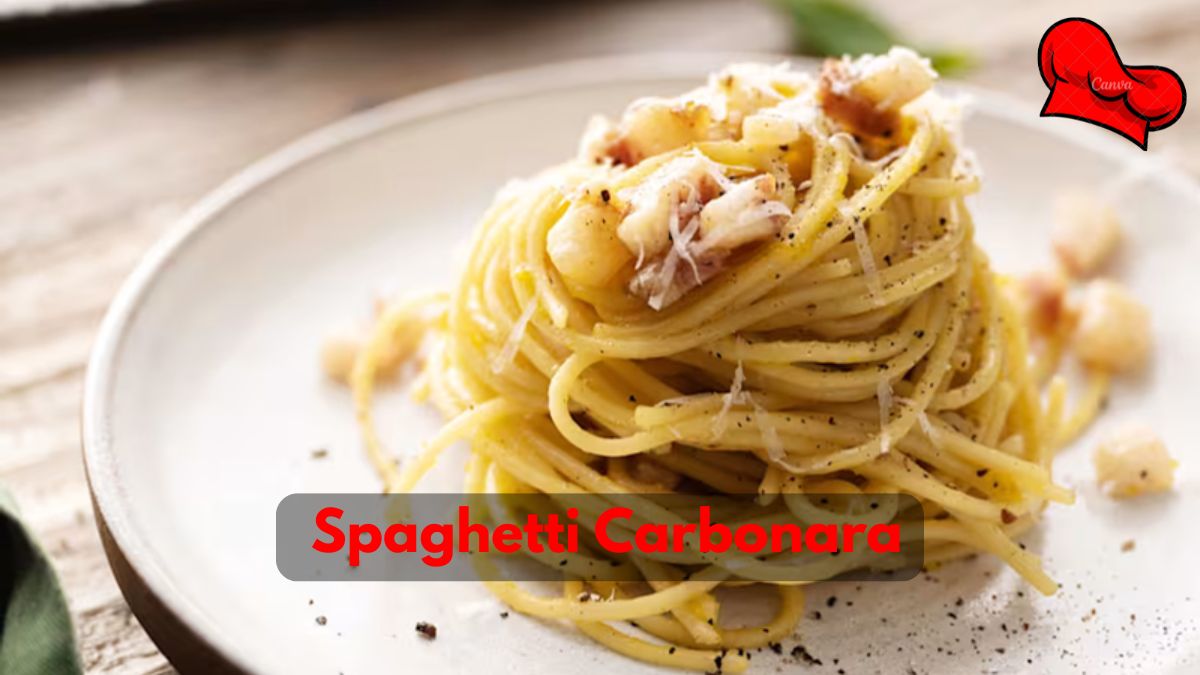
Spaghetti Carbonara Recipe
Spaghetti Carbonara is more than just a creamy pasta dish—it’s a love letter from Rome itself. Often misunderstood and overcomplicated around the world, real Carbonara is a minimalist marvel. In this article, we’ll share not just the true, traditional recipe, but also the fascinating origin story behind it. Let’s get saucy!
📜 A Slice of Roman History: Where Did Carbonara Come From?
Despite being one of Italy’s most famous dishes, Carbonara’s origins are surprisingly recent in the grand history of Roman cuisine.

➤ Origin Theories:
Post-WWII American Influence:
The most widely accepted theory is that Carbonara was created around 1944 when American soldiers brought eggs and bacon (or powdered versions) to Italy during WWII. Italian cooks combined them with pasta, creating what would become Carbonara.
Coal Miners’ Dish (Carbonari):
Another theory links it to the “carbonari,” or Italian charcoal workers. The dish was said to be easy to cook over coal fires, using pantry ingredients—eggs, cured pork, cheese, and pasta. The black pepper even had a coal dust-like appearance.
Not From Naples or Bologna:
Contrary to popular belief, Carbonara has no cream, garlic, or onions, and it isn’t a Neapolitan or Bolognese recipe. It’s a Roman classic—bold, simple, and packed with character.
👉 So what’s the truth?
While we may never pinpoint the exact inventor, it’s agreed by Italian food historians that Spaghetti Carbonara became popular in post-war Rome, using basic but rich ingredients that locals had access to.
🍝 Traditional Spaghetti Carbonara Recipe (Serves 2)
Ingredients:
- 200g Spaghetti (or any pasta you love)
- 100g Guanciale (or Pancetta if unavailable)
- 2 Large Egg Yolks + 1 Whole Egg
- 50g Pecorino Romano Cheese (finely grated)
- Freshly Cracked Black Pepper (to taste)
📝 Note:
No cream, no garlic, no butter. Just 5 ingredients!
🔪 Step-by-Step Instructions:
1. Boil the Pasta
Cook pasta till al dente in a large saucepan of boiling water with a generous amount of salt.
Save 1/2 cup of pasta water before draining.
2. Prepare the Guanciale
Slice the guanciale into tiny cubes or thin strips.
Cook over medium heat in a skillet until browned and crispy. Remove from heat.
3. Make the Carbonara Sauce
In a bowl, whisk together the egg yolks, whole egg, and Pecorino Romano until creamy.
Add a generous amount of freshly cracked black pepper.
4. Combine Everything
When the pasta is heated and drained, add the crispy guanciale (heat off) to the pan.
Over the pasta, quickly pour the egg-cheese mixture and toss vigorously.
Add reserved pasta water little by little to make the sauce silky and glossy.
5. Serve Immediately
Plate it up, add extra Pecorino and pepper on top, and enjoy Roman perfection!
🍷 Pair It Like a Pro
Pair your Carbonara with a dry white wine like Pinot Grigio or a light red like Chianti. These perfectly counterbalance the cheesy, salty richness.
🧠 Fun Fact:
The word “Carbonara” may have come from the word “carbonaro,” which means charcoal burner, given the dish’s humble and substantial beginnings. Also, traditional Carbonara never used cream—just eggs and cheese for that rich texture.
🏁 Final Verdict
Spaghetti Carbonara is a celebration of simple, quality ingredients and centuries-old culinary wisdom. Whether you’re cooking it in a modern kitchen or dreaming of Roman cobblestone streets, this dish connects you to a rich, savory past. And once you taste the true, no-cream version, there’s no going back.